
A message in the group chat could change your teenager’s plans for the day. Here’s how you might work out together whether to believe it. About four minutes.
If you read nothing else
Ask what your teenager wants to know before offering an answer. A friend who forwards a screenshot may be doing them a favour, even if the information turns out to be wrong. Look for the person or organisation that could actually confirm the news. If you still can’t tell, it’s fine to say so and leave the message where it is. If the rumour concerns someone at school, you can ask the school privately without giving it a wider audience.
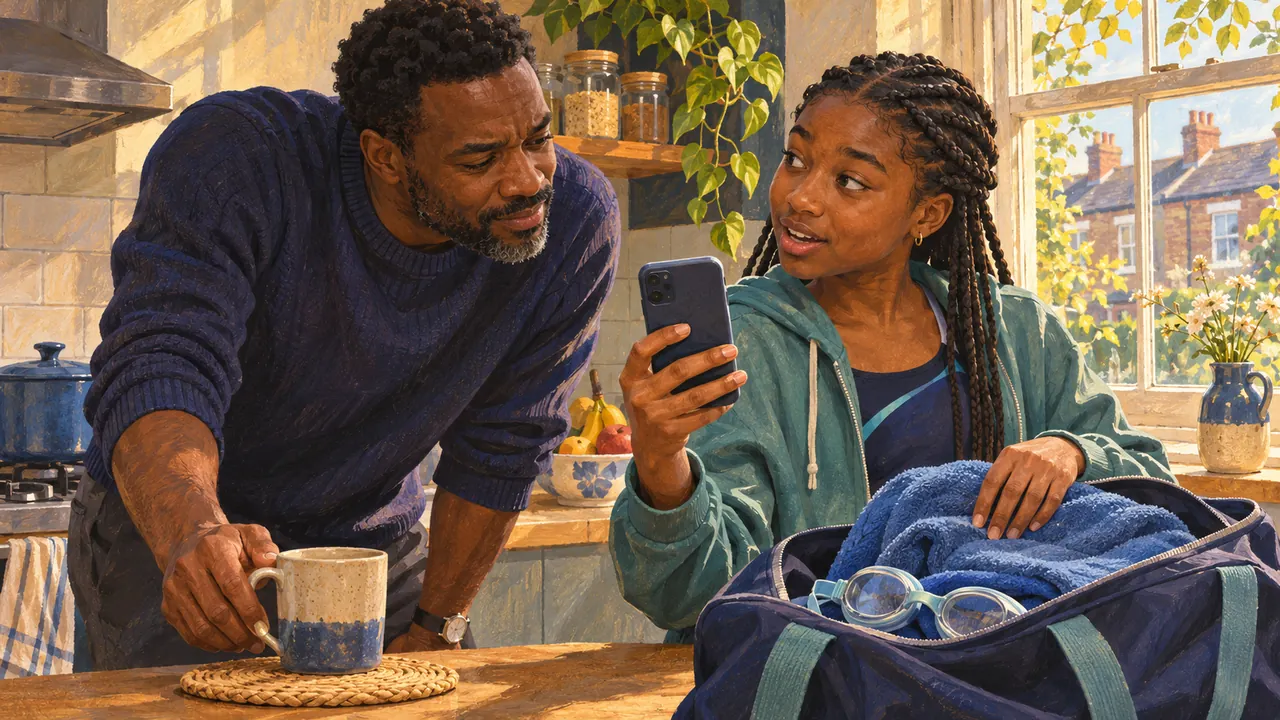
Is swimming off this morning?
Hypothetical example. Your daughter has packed her towel when a friend sends a photo of a notice on the leisure centre door. The pool is closed for repairs. Two more people in the swimming group pass it on. She wants to know whether it’s worth getting on the bus.
You recognise the entrance. Your daughter spots something you missed. There’s a date on the notice, but the bottom of the photo is cropped. It could be from last winter. At this point, asking her to show you the rest of the chat won’t settle much. “Shall we see what the pool says about today?” gives you both somewhere to go.
She can open the centre’s website herself and look for a dated update. A regular Saturday timetable won’t settle whether there’s a closure today. If the website is silent and the bus is due, ringing reception might be quicker. If the pool confirms it’s open, she has something useful to send back to her friend. If nobody answers, she can say she hasn’t managed to check yet.
Why does it feel as though everyone has seen it?
Three friends have sent the photo, but all three copies show the same torn corner. You still have one notice. A group chat can be very good at getting news to people quickly. It also lets a message travel a long way after somebody has cropped off the date.
Something similar can happen on a public feed for a different reason. A service may use what you watch again, like or share to choose what to show you next. Seeing another clip on the same subject can tell you something about what the service thinks will interest you. Has anyone else actually checked the story? That takes a separate look. Ofcom explains how recommendations work.
AI often comes up when a picture looks doubtful. Yet the pool photo could be perfectly genuine. Someone only has to put “this morning” above an old picture to change what it appears to prove. An earlier copy can help you work out where it came from. Full Fact shows how to check the history of a picture.
What if your teenager believes something you doubt?
“What made you think they might be right?” leaves room for an answer. Perhaps the friend who sent it is usually reliable. Perhaps the clip is the only one either of you has seen. If someone claims that a group is secretly behind an event, ask which part of the story you could check. You can take the question seriously and leave the allegation out of the family chat.
With a child just starting secondary school, you might find the original together. An older teenager might prefer to check on their own and tell you what they found. Give them the same chance to question something you’ve shared. If you passed on an old notice, going back to the people you sent it to and correcting the date is a better example than a talk about being careful.
Where does school come in?
One question for a parents’ evening is, “When pupils use a source in class, what do you ask them to check?” A history teacher might ask who wrote an account and when. That question works just as well on a screenshot. If a rumour singles out a pupil, a private conversation with the school gives staff a chance to respond without families circulating the allegation or the child’s name.
Evidence behind this article
For its November 2026 report, the Commission into Countering Online Conspiracies in Schools listened to 12 groups of parents in England. Parents described talking things through at home, sometimes with a child spotting something the adult had missed. Their accounts also differed on when to start and how much help schools offered. The researchers asked about experiences. They didn’t test which conversations work best. Read the Commission’s Parents as Partners report.
There is evidence for looking beyond the item in front of you. In a US school study, pupils taught to leave an unfamiliar site and check what other sources said improved at judging online material compared with pupils in the comparison classes. That was a set of lessons. Whether one conversation at home has a lasting effect is a different question. Read the researchers’ account of the 2022 classroom study.
Further reading
For a post that has lost its source or its date, Full Fact’s short checking guide is a useful place to start. For the conversation itself, the NSPCC has suggestions for UK parents on talking about life online. If an answer came from a chatbot, try Luminae’s guide to children asking AI for advice.
Find more educational articles in Luminae’s Parents Channel. Was this useful? We welcome ideas for other articles. Please leave out children’s names and private details.